

Adult Palatal Expansion MARPE: Who It’s For, What Changes
Adult palatal expansion MARPE is getting a lot of attention nowadays because it can help widen a narrow upper jaw in some adults without jumping straight to full surgical expansion.
That said, it is not a one-size-fits-all solution, and the “right” choice depends heavily on your age, anatomy, and goals, which is exactly why a proper evaluation matters. Research consistently shows the likelihood of successfully opening the midpalatal suture with MARPE tends to drop as patients get older.
In this post, you’ll learn what MARPE is, who it’s for, what changes you might notice, what the timeline usually looks like, the risks and alternatives, and the smartest questions to ask at your consultation. If you’re in San Clemente or Laguna Niguel, you’ll also find clear next steps at the end.
Adult palatal expansion MARPE uses small temporary screws in the palate to help widen a narrow upper jaw in teens and adults. It aims for more skeletal expansion than tooth-only expanders. Treatment typically includes an active expansion phase plus a holding phase so the new width can stabilize.
What Is MARPE (Adult Palatal Expansion) in Plain English?
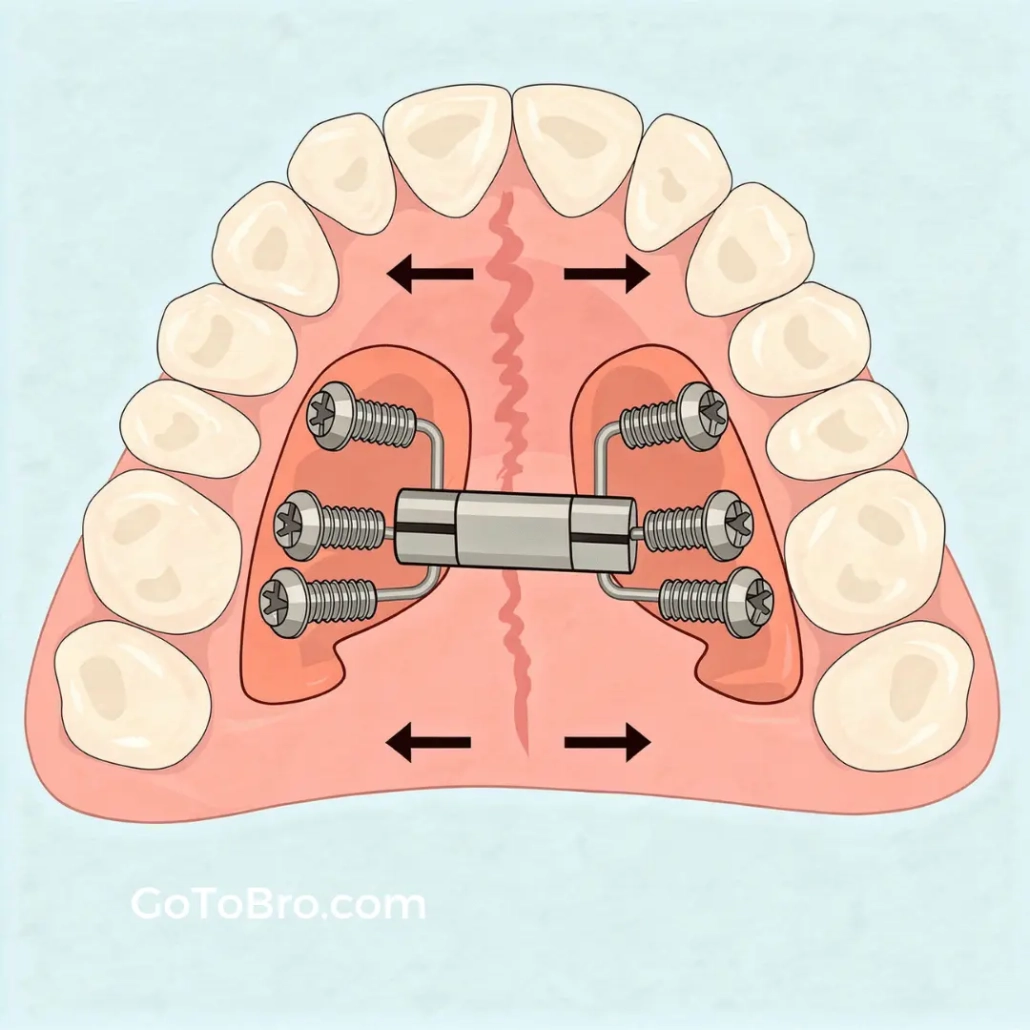
MARPE stands for miniscrew-assisted rapid palatal expansion, (that’s a bit of a mouthful, so it’s referred to as MARPE). It’s an expander that uses small temporary screws (miniscrews) in the palate to help deliver expansion forces closer to bone, not just through the teeth. The goal is more skeletal expansion than a tooth-only expander, which can matter a lot in older teens and adults where the suture is more mature.
Important note: MARPE is still orthodontic treatment. It is not a DIY device, and it should be planned and monitored by an orthodontic team.
Signs You Might Be a Candidate for Adult Palatal Expansion MARPE
MARPE is usually discussed when the upper jaw is too narrow compared to the lower jaw. Some common signs that bring adults in for an evaluation include:
- A narrow, “V-shaped” upper arch
- Posterior crossbite (upper teeth biting inside lower teeth in the back)
- Crowding that seems tied to a narrow arch, not just tooth size
- Frequent cheek biting while chewing
- A bite that feels like it “doesn’t fit,” or a jaw shift when you close
- History of orthodontic relapse where alignment didn’t hold because the arch foundation stayed narrow
High-intent clue: If your main goal is true width (a better foundation and bite fit), not just straighter teeth, MARPE is often part of the conversation because aligners or braces alone may tip teeth outward without the same skeletal change.
What MARPE Can Change (Space, Bite, Smile)
When MARPE works as intended, it can create real changes that many adults notice:
- More room in the upper arch, which can reduce crowding pressure
- Better crossbite support and a more coordinated bite
- A wider smile appearance, often described as less “narrow” in the back corners of the smile
- Changes in how your teeth meet as the expansion progresses (often temporary during the active phase)
Some people ask about airway or nasal breathing changes. There is ongoing research in this area, but outcomes vary a lot by individual anatomy, and it is best to treat airway changes as a possible secondary effect, not a guaranteed benefit.
MARPE vs Traditional Expanders vs SARPE
Adults often hear three terms and wonder which path applies to them.
Traditional expander (RPE)
Traditional rapid palatal expanders tend to be most predictable in growing children. In fully mature adults, the skeletal effect is less predictable because the midpalatal suture is more resistant.
MARPE
MARPE adds miniscrews to deliver expansion forces closer to the midpalatal suture. This approach is commonly used in adolescents and adults when the orthodontist believes skeletal expansion may still be achievable without surgical assistance.
SARPE
SARPE is surgically assisted rapid palatal expansion. It is often considered when sutures are more mature, when the needed expansion is larger, or when non-surgical expansion is unlikely to succeed. (Your orthodontist will explain when this becomes the better option.)
Bottom line: the best plan is based on diagnosis, not trends. Adults should expect imaging and careful measurements to guide this decision.
How MARPE Works Step by Step
While every office has its own workflow, MARPE treatment usually follows this sequence:
- Consultation and records
- Photos, bite analysis, and digital scans
- In many adult cases, CBCT imaging is used to evaluate anatomy and plan placement
- Appliance placement
- The expander is fitted, and miniscrews are placed to support anchorage
- You’ll feel pressure and “fullness” in the palate at first, which is normal
- Activation phase
- You follow a turn schedule provided by your orthodontist (do not improvise)
- Changes are gradual, and your orthodontist monitors progress and comfort
- Holding (retention) phase
- After the desired width is achieved, the expander stays in place to let new bone stabilise
- This phase is critical for long-term stability
- Finishing phase
- Many adults still need braces or aligners afterward to refine alignment and bite
Timeline: What to Expect Week by Week
Every case is different, but here’s the general pattern many adults experience.
Week 0 (placement week)
- Pressure, tightness, and a “this feels strange” sensation
- Speech changes and extra saliva
- Eating feels awkward at first, especially with chewy foods
Week 1
- This is often the most uncomfortable week
- Soft foods help a lot
- The appliance starts to feel more “normal” day by day
Weeks 2 to 6 (often active expansion window, varies)
- Expansion continues per your orthodontist’s schedule
- A temporary gap between the upper front teeth can appear
- Your bite can feel off temporarily as the upper arch widens
After active expansion (holding phase, often months)
- The expander stays in place so the change can stabilise
- Later, braces or aligners refine tooth positions and close remaining spacing as needed
What affects timing?
- Age and suture resistance
- Your anatomy and bone thickness
- Appliance design and protocol
- Consistency with the plan
Does MARPE Hurt?
Most adults describe MARPE as pressure and soreness, not sharp pain. The discomfort is usually front-loaded, meaning it’s stronger early on and improves as you adapt.
What tends to help:
- Soft foods during the first week
- Warm salt-water rinses if tissues feel irritated
- Orthodontic wax if anything rubs
- Staying consistent with your orthodontist’s activation schedule (avoid “catch-up” turns)
Call your orthodontist promptly if:
- Pain is worsening instead of improving
- You notice swelling, bleeding, or signs of infection
- Any part feels loose or poking
- You cannot follow the activation protocol because something feels stuck or wrong
The Gap and Other Changes That Surprise Adults
Adults often ask about the “gap.” It’s a real possibility and usually not a problem.
The temporary gap (diastema)
As the upper jaw widens, the front teeth can separate slightly. This is often temporary and typically addressed during the finishing phase with braces or aligners.
Speech changes
Your tongue has less room at first, so certain sounds can feel tricky. Most people adapt quickly.
Bite changes
During active expansion, your bite can feel different. This is usually temporary while things are moving.
Smile appearance
Many adults notice a wider smile, often described as less “narrow” in the back corners. Changes vary, and it’s best to keep expectations realistic.

Success Rates: Why Age and Anatomy Matter
This is where a lot of marketing gets simplified. The research is more nuanced.
One key finding from a 2021 paper in the American Journal of Orthodontics and Dentofacial Orthopedics is that success in opening the midpalatal suture with MARPE tends to decrease with age. Here is the quote exactly as published in the abstract highlights:
“The MARPE success rate is 94.1% up to age 25 years, decreasing to 76% at age 37 years.” (ScienceDirect)
What that means for you:
- Younger adults may have a higher chance of success, on average
- Older adults can still be candidates, but evaluation is even more important
- Anatomy matters too, including bone thickness and suture characteristics
This is why a consultation with proper diagnostics is the whole game. It helps your orthodontist set realistic expectations and choose MARPE, SARPE, or another plan that fits your case.
Risks and Side Effects to Know (Without the Scare Tactics)
Any orthodontic procedure has tradeoffs. Common risks and side effects discussed in the literature and clinical settings include:
- Miniscrew site irritation or inflammation if hygiene slips
- Miniscrew loosening (which may require adjustment or replacement)
- Appliance breakage or discomfort points
- Dental tipping versus skeletal expansion, depending on anatomy and device design
- Asymmetry risk (expansion may not be perfectly even in all cases)
- Relapse risk if retention is not handled properly
The good news is that most complications are manageable when you stay in close contact with your orthodontic team and keep hygiene strong.
Questions to Ask at Your Consultation
Bring these to your visit, they’ll help you get clear answers fast:
- Am I a good candidate for adult palatal expansion MARPE, or is SARPE more appropriate?
- What does imaging show about suture maturation and bone thickness?
- How much expansion are we aiming for, and how will you measure success?
- What is the full timeline, including the holding phase and finishing phase?
- What are the most likely risks in my case?
- If MARPE does not achieve the planned result, what is Plan B?
Final Thoughts and Next Steps in San Clemente and Laguna Niguel
Adult palatal expansion MARPE can be a smart middle path for some adults who need real upper jaw width, not just tooth alignment. The best outcomes come from strong diagnostics, realistic expectations, and a plan that includes retention and finishing, not just the expansion phase. And if you’re older, the evidence makes it clear that evaluation matters even more because success rates tend to decrease with age.
If you want a clear, case-specific answer, book a consultation with GoToBRO:
MARPE FAQ
What does MARPE stand for?
MARPE stands for miniscrew-assisted rapid palatal expansion. It uses miniscrews in the palate to support expansion forces closer to bone, often for older teens and adults.
Can adults really widen the upper jaw without surgery?
Sometimes. Many adults can achieve skeletal expansion with MARPE, but success tends to decrease with age and depends on anatomy. A diagnostic evaluation helps determine if MARPE is realistic or if SARPE is a better fit.
Will MARPE create a gap between my front teeth?
A temporary gap can occur during active expansion. It is a known effect and is often reduced or closed during the finishing phase with braces or aligners.
How long does MARPE take?
MARPE usually includes an active expansion phase plus a holding phase so the new width can stabilise. Total time varies by case and your orthodontist’s protocol.
Is MARPE painful?
Most adults describe pressure and soreness, especially early on or after activations. Persistent worsening pain, swelling, or loose components should be evaluated promptly.
What is the difference between MARPE and SARPE?
MARPE uses miniscrews and orthodontic forces to attempt to open the midpalatal suture without surgical assistance in suitable patients. SARPE is surgically assisted rapid palatal expansion and is often considered when the suture is more mature or non-surgical expansion is unlikely to succeed.
Medical Disclaimer
The information in this article is for general education and does not replace advice from your orthodontist, dentist, or medical provider. Every patient’s needs are different. If you have a question about your treatment, or an appliance is broken, loose, or causing discomfort, contact Bill Redmond Orthodontics for guidance. If you have trouble breathing or swallowing, uncontrolled bleeding, or a serious injury to your mouth or face, call 911 or seek emergency care immediately.
Adult Palatal Expansion MARPE: Who It’s For, What Changes

Dr. Bill Redmond is an experienced orthodontist with offices in Laguna Niguel and San Clemente, California. He specializes in Invisalign, braces, and personalized orthodontic care for children, teens, and adults. With a warm, patient-first approach, Dr. Bill is dedicated to creating healthy, confident smiles.

